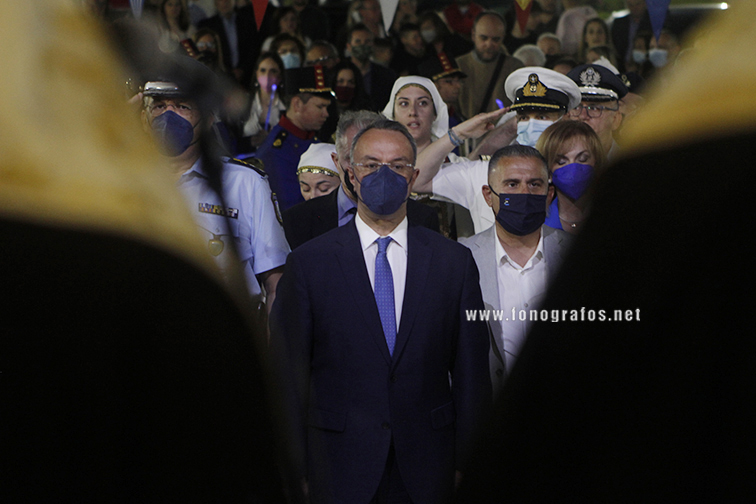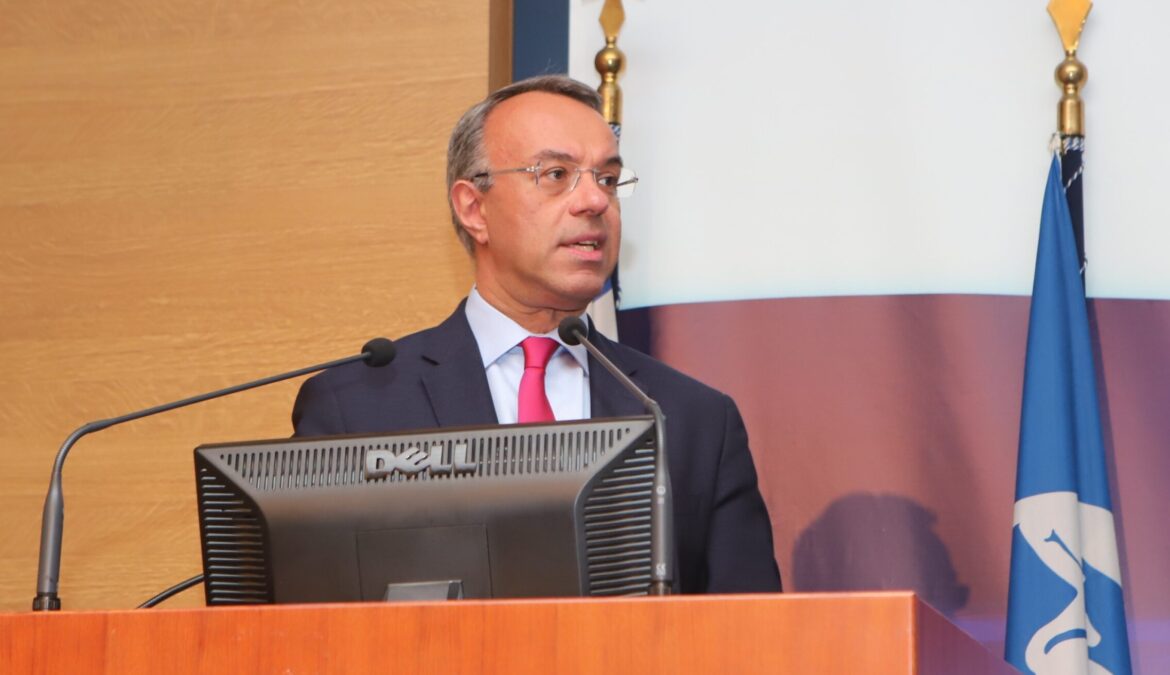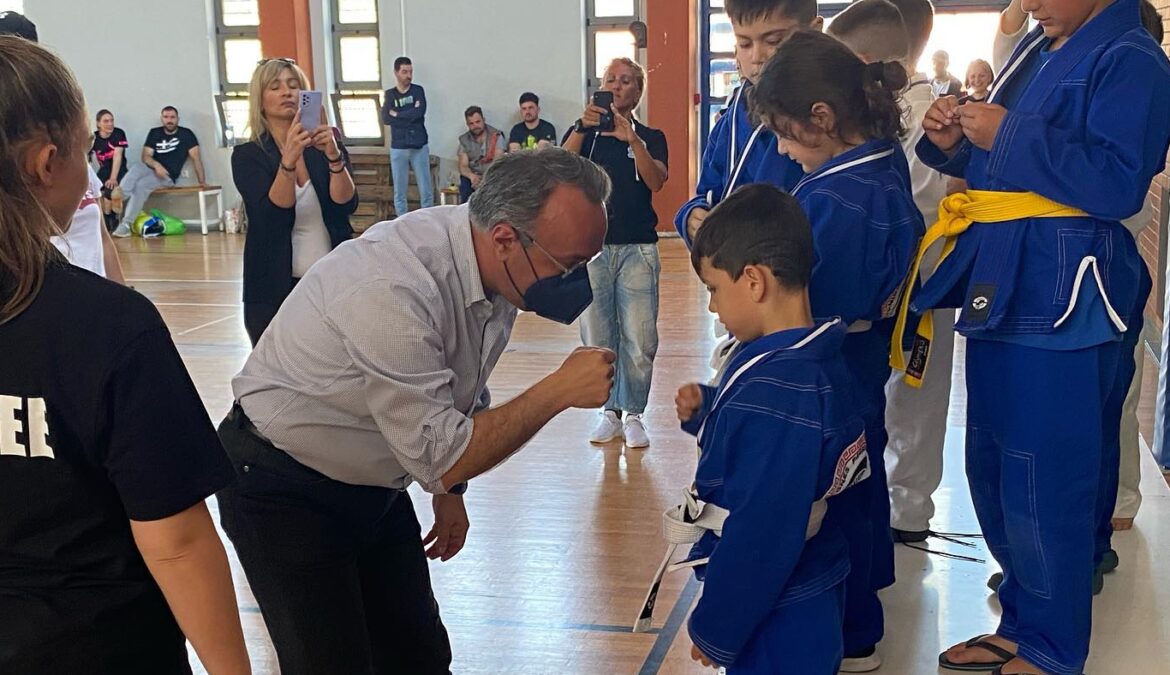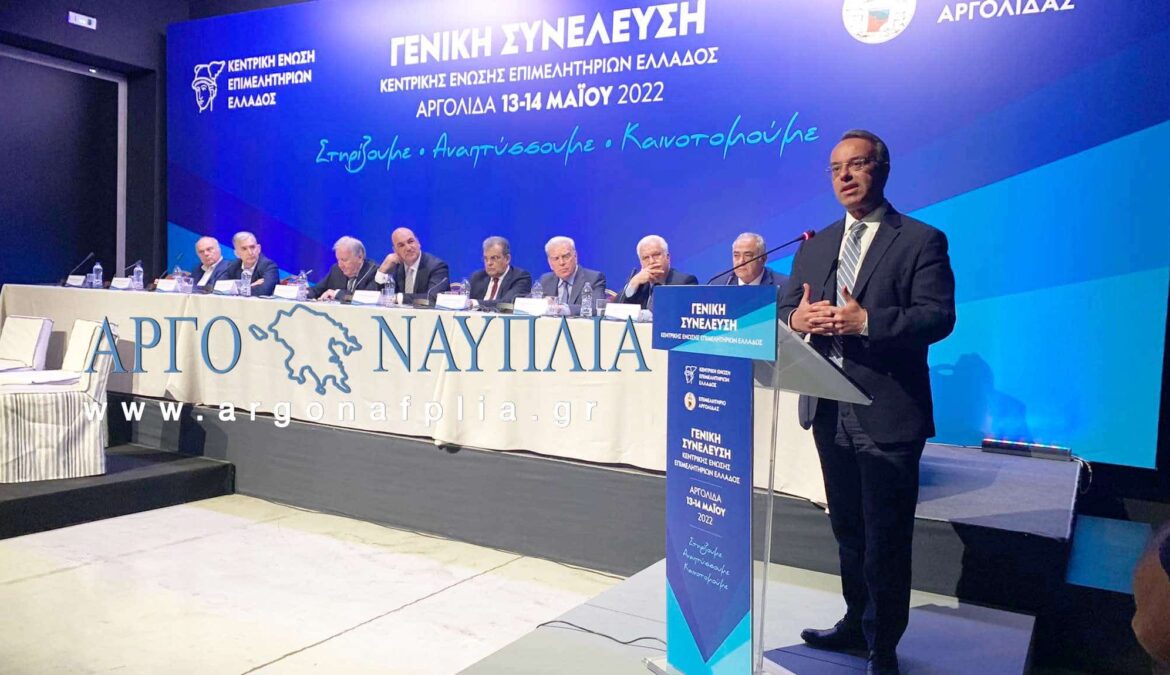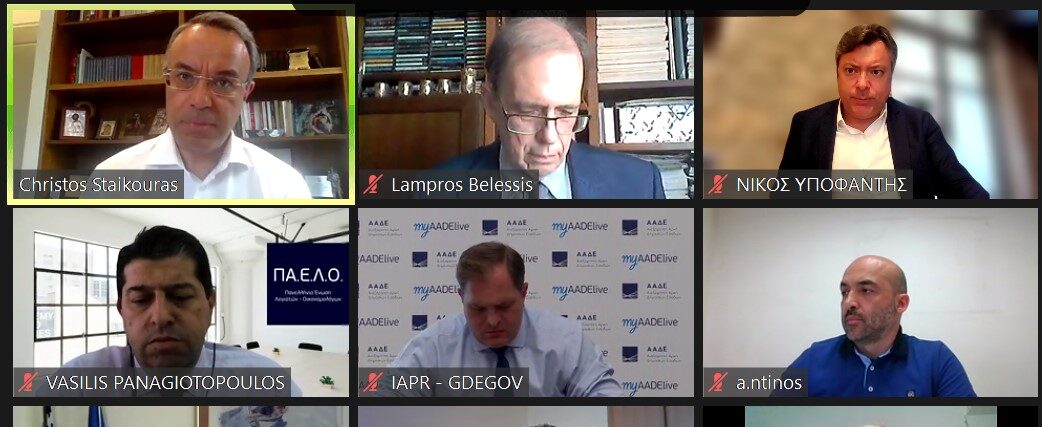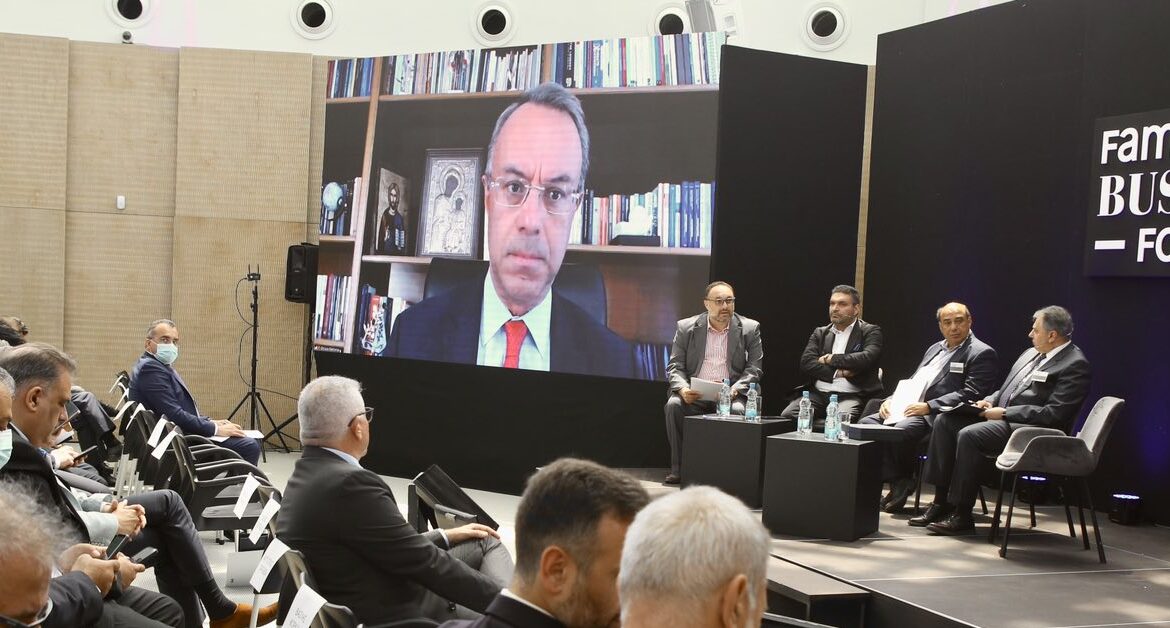
Ο Υπουργός Οικονομικών στην εκδήλωση του ΣΕΒ με την Αντιπροσωπεία της MEDEF International | 9.5.2022

Δείτε Στιγμιότυπα από την παρουσία του Υπουργού Οικονομικών Χρήστου Σταϊκούρα στην εκδήλωση του ΣΕΒ «Ελλάδα – Γαλλία: Γέφυρες Aνάπτυξης και Ευημερίας»:

Δηλώσεις Υπουργού Οικονομικών στο thecaller.gr (video) | 7.5.2022

Ο υπουργός Οικονομικών Χρήστος Σταϊκούρας στο περιθώριο του 14ου Συνεδρίου της Νέας Δημοκρατίας, τόνισε ότι η κυβέρνηση έχει αποδείξει ακόμη και στις κρίσεις ότι βρίσκεται πάντα στο πλευρό του πολίτη.

Μιλώντας στο Thecaller.gr, ο κ. Σταϊκούρας επεσήμανε τα εξής:

«Μέσα από συνετές οικονομικές πολιτικές αποδείξαμε συνέπεια λόγων και έργων. Μειώσαμε φόρους και ασφαλιστικές εισφορές – ιδιαίτερα για τη μεσαία τάξη. Μάλιστα στην ενεργειακή κρίση βοηθήσαμε κυρίως τα ευάλωτα νοικοκυριά. Με τη δέσμη παρεμβάσεων που ανακοίνωσε ο πρωθυπουργός αποδεικνύεται ότι είμαστε κοντά στο σύνολο της κοινωνίας».

Δείτε τη δήλωσή του:

thecaller.gr

Η Ομιλία του Υπουργού Οικονομικών στο 14ο Συνέδριο της Νέας Δημοκρατίας (video) | 7.5.2022

Σάββατο, 7 Μαΐου 2022


Δελτίο Τύπου

Ομιλία του Υπουργού Οικονομικών κ. Χρήστου Σταϊκούρα στο 14ο Συνέδριο της Νέας Δημοκρατίας


Κυρίες και Κύριοι Σύνεδροι,

Νεοδημοκράτισσες και Νεοδημοκράτες,

Με εμπιστοσύνη στις δυνάμεις μας, πίστη στη στρατηγική μας και αισιοδοξία, πραγματοποιούμε το 14ο Συνέδριο του Κόμματός μας, της Νέας Δημοκρατίας.

Νέα Δημοκρατία που «γεννήθηκε» από τον Εθνάρχη Κωνσταντίνο Καραμανλή και τους άξιους συνεργάτες του, σε κρίσιμες – για την πατρίδα – συνθήκες.

Νέα Δημοκρατία που συγκροτήθηκε ως Κόμμα βαθιά δημοκρατικό, λαϊκό, κοινωνικά φιλελεύθερο, ριζοσπαστικό και πολυσυλλεκτικό.

Ως Κόμμα γνήσια προοδευτικό, που τολμά να εξελίσσεται, προς όφελος της Πατρίδας και όλων των Ελλήνων.


Στο 1ο Συνέδριο του Κόμματος, στις 5 Μαΐου του 1979, ο Κωνσταντίνος Καραμανλής είπε πολλά και σπουδαία.

Σταχυολογώ.

Η Νέα Δημοκρατία:

  • Πιστεύει στο έθνος.
  • Πιστεύει στην ειρηνική συμβίωση των λαών και καταδικάζει κάθε πράξη βίας και αυθαιρεσίας.
  • Πιστεύει στην κοινοβουλευτική δημοκρατία, που μάχεται για την πρόοδο του κοινωνικού συνόλου.
  • Πιστεύει στην ελεύθερη δημοκρατική οικονομία.
  • Πιστεύει στην κοινωνική δικαιοσύνη.
  • Πιστεύει στις ιστορικές ρίζες και τις δυνατότητες της χώρας.
  • Πιστεύει ότι η θέση της Ελλάδας είναι στον δυτικό κόσμο και στην ιδέα της Ενωμένης Ευρώπης.
  • Πιστεύει και εργάζεται ώστε οι Έλληνες να είναι ίσοι όχι μόνον έναντι του νόμου, αλλά και έναντι των ευκαιριών.


Έκτοτε, η Νέα Δημοκρατία, υπό τις δημοκρατικά εκλεγμένες, άξιες ηγεσίες των Γεωργίου Ράλλη, Ευάγγελου Αβέρωφ, Κώστα Μητσοτάκη, Μιλτιάδη Έβερτ, Κώστα Καραμανλή, Αντώνη Σαμαρά, Ευάγγελου Μεϊμαράκη και Κυριάκου Μητσοτάκη, παρέμεινε σταθερή στο πλαίσιο των ιδρυτικών της – και πάντα επίκαιρων – αρχών, αξιών και στρατηγικών κατευθύνσεων για τη χώρα.

Έκανε, ταυτόχρονα, τις αναγκαίες τακτικές προσαρμογές στις μεταβαλλόμενες συνθήκες, πάντα με γνώμονα να υπηρετεί, υπεύθυνα, την Πατρίδα, τον Ελληνισμό και τους πολίτες.

Στη μακρά διαδρομή της υλοποίησε, με σωφροσύνη και τόλμη, τις μεγάλες στρατηγικές επιλογές για τη χώρα.

Γι’ αυτό, αν και διαχρονικά πολιτεύθηκε μακριά από ψεύδη, δημαγωγίες και λαϊκισμούς, οι πολίτες, με την εμπιστοσύνη τους, της έχουν δώσει το υψηλότερο ποσοστό καθώς και το μεγαλύτερο αριθμό ψήφων, σε εκλογικές αναμετρήσεις.

Την έχουν αναδείξει, αθροιστικά, ως την πρώτη, ως την πιο ισχυρή πολιτική δύναμη της χώρας.

Ως τον μεγάλο και σταθερό πυλώνα του πολιτικού συστήματος.

Αυτό το πολιτικό κεφάλαιο έχουμε την ισχυρή βούληση, με επικεφαλής τον Κυριάκο Μητσοτάκη, να το ενισχύουμε και να το διαθέτουμε στην υπηρεσία της Πατρίδας και όλων των πολιτών.


Φίλες και Φίλοι,

Τον Ιούλιο του 2019, οι πολίτες ανέθεσαν, και πάλι, τη διακυβέρνηση της χώρας στη Νέα Δημοκρατία.

Έκτοτε, στα τρία περίπου χρόνια, αντιμετωπίσαμε επιτυχώς, μεγάλες, απρόσμενες, πολυεπίπεδες κρίσεις.

Παρά τις πρωτόγνωρες αντιξοότητες, τιμήσαμε την ψήφο των πολιτών, τηρήσαμε τις προεκλογικές μας δεσμεύσεις και υλοποιήσαμε το πρόγραμμά μας.

Στο μέτωπο της οικονομίας, εφαρμόσαμε ένα διαφορετικό και σύγχρονο μείγμα πολιτικής, που εδράζεται σε μια συνετή δημοσιονομική πολιτική, σε μια διορατική εκδοτική στρατηγική, στην υλοποίηση μεταρρυθμίσεων και στην τόνωση των επενδύσεων.

Καταφέραμε, με σκληρή και συστηματική προσπάθεια, να κρατήσουμε όρθια την κοινωνία και λειτουργική την οικονομία, καταγράφοντας θετικές εξελίξεις, όπως είναι:

  • Η ισχυρή ανάκαμψη.
  • Η ενίσχυση της ανταγωνιστικότητας της οικονομίας.
  • Η μόνιμη μείωση φόρων και ασφαλιστικών εισφορών.
  • Η σημαντική συρρίκνωση της ανεργίας.
  • Η στήριξη του διαθέσιμου εισοδήματος των πολιτών.
  • Η αναβάθμιση της πιστοληπτικής ικανότητας της Ελλάδας.
  • Η αποπληρωμή του Διεθνούς Νομισματικού Ταμείου.

Βέβαια, είναι φυσικό τα παραπάνω επιτεύγματα – και οι θετικές προοπτικές που αυτά διαμόρφωσαν – «να θολώνουν» εξαιτίας των νέων, πρόσθετων δυσκολιών και προκλήσεων.

Ωστόσο, τα ισχυρά θεμέλια που έχουμε θέσει τα τελευταία χρόνια, μάς κάνουν να αισιοδοξούμε ότι η νέα κρίση δεν θα οδηγήσει σε μη αναστρέψιμες καταστάσεις.

Θα πλήξει, αλλά δεν θα εκτρέψει την οικονομία.

Ως Κυβέρνηση δημιουργούμε τις δημοσιονομικές δυνατότητες για γενναίες παρεμβάσεις και ουσιαστικές λύσεις.

Όπως έμπρακτα αποδείξαμε, για ακόμη μια φορά, αυτή την εβδομάδα.

Έτσι αντιμετωπίζουμε αποτελεσματικά τις προκλήσεις του σήμερα, χαράσσοντας – παράλληλα – οραματικές πολιτικές για το αύριο.

Ώστε η χώρα μας να συνεχίσει να προοδεύει!

Στο πλαίσιο αυτό, υλοποιούμε σύγχρονες πολιτικές, εκσυγχρονίζουμε τη δημόσια διοίκηση, κινητροδοτούμε την έρευνα και ανάπτυξη, προωθούμε μεταρρυθμίσεις.

Μεταρρυθμίσεις, με όρους οικονομικής αποτελεσματικότητας και κοινωνικής δικαιοσύνης,  με στόχο τη σταδιακή μετάβαση σε δημοσιονομική ισορροπία, την έξοδο της χώρας από το καθεστώς ενισχυμένης εποπτείας, την ορθολογική αξιοποίηση των διαθέσιμων ευρωπαϊκών κονδυλίων, την απόκτηση επενδυτικής βαθμίδας, την ενίσχυση της αποτρεπτικής δύναμης της Ελλάδας, την τόνωση της ρευστότητας στην πραγματική οικονομία, την αξιοποίηση της δημόσιας περιουσίας, τη μείωση των οικονομικών ανισοτήτων.

Όλα αυτά θα συμβάλουν στην ενίσχυση της παραγωγικότητας και της ανταγωνιστικότητας της οικονομίας, στην επίτευξη υψηλής και διατηρήσιμης ανάπτυξης, στη δημιουργία νέων θέσεων απασχόλησης και στην τόνωση της κοινωνικής συνοχής.


Φίλες και Φίλοι,

Η παρούσα συγκυρία είναι ιστορική.

Η Παράταξή μας όμως, διαχρονικά και σταθερά, έχει αποδείξει ότι μπορεί να ανταποκριθεί με επιτυχία, πρωταγωνιστικά και ουσιαστικά, στις ιστορικές προκλήσεις και αποστολές.

Έτσι και τώρα, παρά τις μεγάλες «φουρτούνες», θα τα καταφέρουμε και πάλι.

Όπως άλλωστε έχουμε χρέος, θα οδηγήσουμε το εθνικό σκάφος σε «ήρεμες θάλασσες».

Ενισχύοντας την αξιοπιστία του πολιτικού συστήματος.

Και δημιουργώντας μια νέα σχέση εμπιστοσύνης με τους νέους ανθρώπους, το μέλλον της χώρας μας.


Νεοδημοκράτισσες και Νεοδημοκράτες,

Ολοκληρώνουμε τις εργασίες του 14ου Συνεδρίου με ψυχική ενότητα, πολιτική συνοχή, συναίσθηση της ευθύνης, σεμνότητα  και ακμαίο ηθικό.

Όλες και όλοι μαζί, διαβεβαιώνουμε τις Ελληνίδες και τους Έλληνες, ότι πιστοί στις αξίες και τις αρχές μας, θα εργαζόμαστε – με το σύγχρονο σχέδιό μας – για την προώθηση των συμφερόντων του έθνους, την ισχυροποίηση της πατρίδας και την ενίσχυση της ευημερίας όλων των πολιτών, δίπλα στην κάθε Ελληνίδα, δίπλα στον κάθε Έλληνα!


Δείτε φωτογραφίες με συναγωνιστές, συμμαχητές και φίλους από το 14ο Συνέδριο της ΝΔ:


Κατεβάστε την Ομιλία του Υπουργού εδώ:

2022-05-07 ΔΤ_Ομιλία_ΥΠΟΙΚ_14_ΣΥΝΕΔΡΙΟ_ΝΔ

Ο Υπουργός Οικονομικών στο 1st Greece – Cyprus Business Summit | 6.5.2022

Μία πολύ ενδιαφέρουσα συζήτηση είχαν ο Υπουργός Οικονομικών, κ. Χρήστος Σταϊκούρας και ο Κύπριος ομόλογός του Κωνσταντίνος Πετρίδης, μαζί με την Αιμιλία Κενεβέζου και τον Αντώνη Σρόιτερ κατά τη διάρκεια της Πρώτης Ελληνικής-Κυπριακής Επιχειρηματικής Συνάντησης Κορυφής.

Ο κ. Σταϊκούρας, ξεκινώντας την τοποθέτησή του, αναφερόμενος στην επικαιρότητα, ξεκαθάρισε ότι από τα 3 δισ. που προσέφερε η κυβέρνηση για τα νέα μέτρα για την αντιμετώπιση της ενεργειακής κρίσης, το 1,1 δισ. είναι από τον κρατικό προϋπολογισμό. «Άρα αυτό το λες σταθερή δημοσιονομική πολιτική» σημείωσε.

Μία σταθερή δημοσιονομική πολιτική βοηθάει την κοινωνία με έναν τρόπο να εξασφαλίζει το παρόν και το μέλλον αυτής.

Σε αριθμούς η χώρα μας από ένα πρωτογενές δημοσιονομικό έλλειμα του 7% το 2020 έπεσε στο 5% το 2021 και η προσδοκία για φέτος είναι να έχει ένα 2% και στο συν 1% το 2023, σύμφωνα με τον υπουργό. «Άρα αντιλαμβάνεστε ότι ακολουθούμε ένα μονοπάτι δημοσιονομικής σταθερότητας. Λαμβάνοντας υπόψη αυτή τη καλή δημοσιονομική εκτέλεση, το γεγονός ότι ως χώρα έχουμε στην άκρη από τα υψηλότερα ταμειακά διαθέσιμα σε ποσοστό του ΑΕΠ στην Ευρώπη, πάνω από 39 δισ. ευρώ, και η εκτίμηση ότι ο ρυθμός μεγέθυνσης της οικονομίας -αν και έχουμε πληγεί- πάνω από 3% δημιουργείται ο χώρος να στηρίξουμε τα νοικοκυριά με αυτά τα 3 δις.

Αναφερόμενος στις προκλήσεις, ο υπουργός είπε ότι η Ελλάδα φέτος έχει περισσότερες δαπάνες από έσοδα, έχει το μεγαλύτερο χρέος στην Ευρώπη είναι σε καθεστώς ενισχυμένης εποπτείας, από την οποία προσδοκά η κυβέρνηση να βγει το καλοκαίρι, συμπλήρωσε ότι «κοντά στις προκλήσεις έχουμε και θετικές εξελίξεις που προκύπτει από το γεγονός ότι αξιοποιήσαμε μέσα στη κρίση και βελτιώσαμε το πλαίσιο για να προσελκύσουμε ξένες επενδύσεις. Οι ξένες άμεσες επενδύσεις ήταν 5 δισ. ευρώ το 2021 υψηλότερες από την προηγούμενη χρονιά ενώ οι εξαγωγές ήταν 40 εκατ., όταν πριν από 10 χρόνια ήταν 20 εκατ. και πριν από 20 χρόνια λιγότερο από 5 εκατομμύρια.


Δείτε σχετικά φωτογραφικά στιγμιότυπα:

Ο Χρ. Σταϊκούρας στη συνεδρίαση της ΔΕΕΠ Φθιώτιδας (video) | 17.4.2022

Στη συνεδρίαση της ΔΕΕΠ Φθιώτιδας παραβρέθηκε ο Υπουργός Οικονομικών και Βουλευτής Φθιώτιδας με τη Νέα Δημοκρατία, Χρήστος Σταϊκούρας.

Δείτε φωτογραφικά στιγμιότυπα:

Δείτε τις δηλώσεις του Υπουργού Οικονομικών στο Star Κεντρικής Ελλάδας:

Ο Υπουργός Οικονομικών στην Ημερίδα της ΔΑΠ στο ΕΚΠΑ | 14.4.2022

”Με τους νέους ανθρώπους σχεδιάζουμε το μέλλον.
Εδώ, στην ημερίδα της ΔΑΠ – ΝΔΦK στο ΕΚΠΑ, είχαμε την ευκαιρία να συζητήσουμε για τις προκλήσεις που έχουμε μπροστά μας ως οικονομία και πως θα τις αντιμετωπίσουμε αποτελεσματικά” τόνισε ο Υπουργός Οικονομικών και Βουλευτής Φθιώτιδας με τη Νέα Δημοκρατία κ. Χρήστος Σταϊκούρας.
Δείτε σχετικές φωτογραφίες:

Ο Υπουργός Οικονομικών στο Χρηματιστήριο της Νέας Υόρκης | 12.4.2022

Στο πλαίσιο του 23ου Ετήσιου Capital Link Invest in Greece Forum, το Χρηματιστήριο της Νέας Υόρκης, σε συνεργασία με την Capital Link διοργάνωσαν ειδική εκδήλωση με τίτλο «GREEK AMERICAN ISSUER DAY» στο Χρηματιστήριο της Νέας Υόρκης κατά τη διάρκεια της οποίας οι Ελληνοαμερικανικές και Ελληνικών συμφερόντων εταιρίες που είναι εισηγμένες στο Χρηματιστήριο της Νέας Υόρκης χτύπησαν το “Opening Bell – καμπανάκι της έναρξης των εργασιών” της Τρίτης, 12 Απριλίου, 2022, του NYSE-New York Stock Exchange.


Το καμπανάκι της έναρξης του Χρηματιστηρίου της Νέας Υόρκης χτύπησε χθες, 12 Απριλίου, ο υπουργός Οικονομικών Χρήστος Σταϊκούρας.  Μαζί του βρίσκονταν ο υπουργός Ανάπτυξης και Επενδύσεων Άδωνις Γεωργιάδης, ο αναπληρωτής υπουργός Ανάπτυξης και Επενδύσεων Νίκος Παπαθανάσης και o κ. Παναγιώτης Τσακλόγλου, Υφυπουργός Εργασίας και Κοινωνικών Υποθέσεων.

Δείτε φωτογραφίες από την ”Ημέρα Ελλάδας” στη Νέα Υόρκη:

Ο Υπουργός Οικονομικών στο 2o Athens ESG Forum (video) | 12.4.2022

Δείτε στο βίντεο που ακολουθεί την Τοποθέτηση του Υπουργού Οικονομικών Χρήστου Σταϊκούρα στο 2o Athens ESG Forum, με τίτλο ”The emerging Landscape of Sustainable Finance”:

Ομιλία του Υπουργού Οικονομικών στο 23ο Ετήσιο Συνέδριο της Capital Link στη Νέα Υόρκη | 11.4.2022

 Δευτέρα, 11 Απριλίου 2022


Δελτίο Τύπου


Ομιλία του Υπουργού Οικονομικών κ. Χρήστου Σταϊκούρα στο 23ο Ετήσιο Συνέδριο της Capital Link στη Νέα Υόρκη Invest in Greece Forum”


I would like to thank Capital Link for inviting me and offering the opportunity to share some thoughts οn the state of play of the Greek economy and its positive prospects, in these challenging – globally – times.


Ladies and Gentlemen,

Since the beginning of 2020, the world economy is being tested by a series of unprecedented and consecutive exogenous shocks in the fields of health, energy and geopolitics.

Amid these crises and despite the turbulences and high uncertainty and volatility caused by them, the Greek economy has demonstrated remarkable resilience and important achievements, as a result of the well-targeted and effective policies pursued by the Government, protecting incomes, jobs and businesses.

Among others, in 2021:

  • A “V-shape” recovery has been recorded.
  • Investments and exports of goods and services were strengthened.
  • Unemployment has shrunk, significantly.
  • The real disposable income of households was supported.
  • The economic sentiment improved.
  • Non-performing loans decreased and deposits increased, drastically.
  • The Greek sovereign was upgraded.


All these achievements are due to and based on the implementation of a prudent, coherent, reform-oriented, growth-friendly and insightful economic policy.

The effectiveness of that economic policy is acknowledged by all “stakeholders”, like European partners, international institutions, rating agencies and investors.

Consequently, the “big picture” of the Greek economy is positive and its prospects are even more positive.

However, I have to acknowledge that this positive outlook is blurred, by new, serious exogenous difficulties and challenges.

Due to the ongoing war in Ukraine, the situation of the European economies, each month, is getting worse.

Many leading factors in the economy are, once again, under severe pressure.

The negative effects have spread throughout the supply chains and consumer sentiment.

We are sinking, more and more, into the quicksand of the new global economic crisis.

Citizens’ disposable income is shrinking dramatically.

Growth rates are declining.

Inflation is fast increasing.

No country will get out of this situation, and of course this includes Greece, unscathed.

And national actions to address the economic consequences are not enough.

Thus, collective, responses are needed, immediately.

In this context, and as far as Europe is concerned, I would like to share the following comments:

1st. Developments in the price of natural gas do not seem to be consistent with the actual disruptions in supply.

This implies a need for interventions to reduce existing distortions and destabilizing speculative pressures.

2nd. We need to look at how the prices of fossil fuels will be decoupled from the price of electricity, which is at very high levels, regardless of whether it is produced from cheaper energy sources.

3rd. We believe that attempts towards ensuring adequate storage of gas are very important and should be complemented by joint purchases, so as to take advantage of the market power that the European Union, as a single buyer, can exercise.

4th. We need to build a “safety net”, as we successfully did during the pandemic, for households and businesses.


Ladies and Gentlemen,

The recent events reconfirm the importance of being prepared for any eventuality, building up resilience to cope with shocks and building for the future.

Thus, irrespectively of the actions that will take place globally, it is of outmost importance to continue implementing – internally – a prudent, growth-friendly and reform-oriented economic policy agenda, improving even more the fundamentals of the Greek economy.

This policy agenda is based upon 7 pillars:


1st Pillar: Providing well-targeted, one-off support measures, especially for the most vulnerable households and enterprises, utilizing the available European and national tools, in order to reduce mainly the heavy energy cost on disposable income.


2nd Pillar: Following a prudent fiscal policy.

We expect a much better than projected fiscal outcome for 2021, a significant fiscal consolidation in 2022, and the achievement of realistic primary surpluses from 2023 onwards.

This credible fiscal path is mainly based on growth, with higher permanent tax revenues, enhanced by growth-friendly reduction on taxes and social security contributions.


3rd Pillar: Implementing a smart issuing strategy.

Greek public debt, as confirmed recently by IMF, ESM and the European Commission, is sustainable, because:

  • it has a long weighted average maturity,
  • most of it is held by the official sector, and
  • it presents a significant fixed rate component.

The full early repayment of Greece’s outstanding IMF loans, as well as the announced prepayment of a portion of its GLF loans, at the end of this year, according to the ESM, “send a positive signal to markets about Greece’s financing position, have a positive impact on Greece’s public debt profile and generate some savings for the Greek budget.”


Additionally, Greek debt presents low average annual gross financing needs, in the range of 10% of GDP for many years ahead.

Finally, we maintain substantial cash buffers, whose value is equal to approximately 20% of GDP, among the highest among European countries.

Thus Greece, under all circumstances, will service its public debt.


4th Pillar: Enhancing liquidity in the real economy.

This will be achieved through 3 routes:

1st. Credit expansion, as started being observed in 2021, based on improving banks’ balance sheets.

New credit, in 2021, stood at 20.2 billion euros.


2nd. The implementation of the Loan Facility of the Recovery and Resilience Plan.

This is an innovative financing mechanism, aiming to fill the large national investment gap observed in Greece over the past decade, using financial leverage as a multiplier for private investment.

The Loan Facility finances only productive investment in selected areas, like green, digital, extroversion, innovation and economies of scale, using a funding scheme ensuring that all players have skin in the game, that the RRF regulation requirements are met, subject to independent audits and controls.

Investment projects financed by the Loan Facility are selected on purely market-based criteria, by the participating international Financial Institutions, like EIB and EBRD, as well as commercial banks, without any state involvement.

These will be the only assessors of the viability of the investment projects and the creditworthiness of the borrower.


3rd. The implementation of the new insolvency framework, which is, truly, state-of-the-art.

Indeed, we have achieved the first successful debt settlements through its out-of-court workout platform, and the first acceptances by debtors.

Additionally, we elaborate a number of measures and reforms, including the establishment of a Public Credit Bureau and a Central Credit Registry, as well as the implementation of a National Strategy for Private Debt Management, in order to prevent future private debt build-up and enhance the secondary NPL market.


5th Pillar: Implementing structural changes and utilizing public property.

We have developed an ambitious Asset Development Plan, through the Hellenic Corporation of Assets (HCAP) and the Hellenic Republic Asset Development Fund (HRADF), which is on track.

The Plan includes several privatizations and long-term lease projects.

The progress of the Hellenikon project, on ports, marinas, energy companies, logistics centers, is indicative of the Plan’s successful path.

Moreover, we have passed a new labour law, improving – at the same time – both the business environment and workers’ rights and personal line balance.

We have also completed a number of important reforms to modernize and digitalize public administration, to reorganize the pension administration, to simplify the framework for investment licensing, to provide a modern corporate governance regime, to establish tax incentives to boost research and innovation, as well as to attract investment and human capital from abroad.

Finally, in the next few days we will pass from Parliament a new law, bringing a revolution to the upskilling/re-skilling framework of our country.

Indeed, over the last almost 3 years, we have passed 298 laws from the Greek Parliament, improving our citizens’ everyday life and making the Greek economy more friendly for business.

At the same time, Greece has made significant progress in all governance indicators published by organizations, such as the World Bank and Transparency International.

Going forward, some of the focus areas include:

  • broadening the tax base by further improving tax collection,
  • increasing public sector’s efficiency and productivity,
  • improving the educational and the justice system,
  • enhancing transition to the green, sustainable economic model.


6th Pillar: Rationally utilizing the available European funds, having at the forefront the Recovery and Resilience Fund and the new EU Cohesion funds National Strategic Reference Framework, around 80 billion euros up to 2027.

In terms of percentage in GDP, this is an amount double than the funds Greece received in the context of the Marshal Plan!

The National Recovery and Resilience Plan, Greece 2.0, is in full swing.

To date, 173 planned projects and subprojects have been incorporated into the implementation phase, of total face value equal to 8.5 billion euros.

Last Friday, Greece received the first installment of grants and loans, totaling almost 3.6 billion euros.

In order to receive it, we completed milestones relating to 8 reforms and 7 investments, relating – among others – to:

  • electro mobility and energy savings,
  • the organizational reform of the Public Employment Service,
  • the new legislation of business extroversion, the tax codification, the modernization of the Hellenic Capital Market Commission,
  • the setting up of the management, control and audit systems.


7th Pillar: Actively participating in the initiatives for the new European economic architecture.

Among others, we support:

  • the completion of the Banking Union,
  • the deepening of the Capital Markets Union,
  • the agreement on a Two-Pillar Solution to Address the Tax Challenges Arising from the Digitalisation of the Economy,
  • the reform of the Stability and Growth Pact.

As far as the latter is concerned, given the increase in public debt ratios over the last couple of years, a reinstatement of the present fiscal rules makes little economic sense and would not be credible with markets.

The revised fiscal framework should ensure, among others, that:

  • debt reduction paths are not frontloaded in the aftermath of the pandemic crisis,
  • fiscal policy is counter-cyclical,
  • productive investment is protected.

Moreover, we support a framework fostering national ownership of fiscal adjustment plans, a medium-term approach in fiscal surveillance, as well as the establishment of a central fiscal capacity.


Ladies and Gentlemen,

The continuation of policy implementation based on these 7 pillars, will lead to the achievement of 7 specific targets we have set the previous years:


1st Target: Achieving high growth rates.

We observed a strong recovery, of 8.3% in 2021, we project a growth rate above 3% in 2022, and we expect significant growth rates from 2023 onwards.

The reforms, already under implementation, included also in our national Recovery and Resilience Plan, will be paying “growth dividends” for many years to come.


2nd Target: Achieving sustainable growth, through improving the quality of GDP.

Indeed, both investment and export components increased strongly in 2021.

We expect, according to the European Commission estimates, the highest – compared with EU peers – percentage increases in 2022 and 2023.


3rd Target: Exiting the Enhanced Surveillance Mechanism.

As Executive Vice-President of the European Commission Valdis Dombrovskis mentioned last Friday, we are going to “transit out of Enhanced Surveillance this summer and receive the final tranches of debt relief, which is to be decided in June.”


4th Target: Achieving single-digit rate of non-performing loans on banks’ balance sheets.

At the end of December 2021, the total stock of NPEs declined to 18.4 billion euros, and the NPEs ratio dropped to 12.8%, the lowest readings since June 2010.

Indeed, in 2021, two out of four large systemic banks achieved this objective.


5th Target: Reducing poverty and inequalities.

The proportion of the population at risk of poverty or social exclusion declined in 2020.

Overall, based on the available data, the inequality indicators show:

  • strengthening the position of the middle class against the richer income groups,
  • reducing the risk of poverty and social exclusion in the general population,
  • stabilizing the position of the poorest income groups against the richer ones.


6th Target: Moving towards fiscal balance.

I have already commented on that.


7th Target: Obtaining the investment grade, in 2023.

We are moving towards achieving this objective.

In the last 3 years, despite the consecutive crises we had to face, we have been upgraded by rating agencies 8 times.


Ladies and Gentlemen,

I spoke to you, today, about the 7 pillars and the 7 goals of our economic policy.

We know where we are, we know where we want to go, and we know how to go!

Despite difficulties and international volatility, Greece is efficiently implementing reforms and coherent policies which provide the impetus to form a more resilient and inclusive economic landscape, achieving high and sustainable growth, creating many jobs and enhancing social cohesion.


Δείτε φωτογραφίες από την εκδήλωση:


2022-04-11 ΔΤ_Ομιλία_ΥΠΟΙΚ_Capital_Link

Ο Υπουργός Οικονομικών στο Οικονομικό Φόρουμ των Δελφών | 7.4.2021

Πέμπτη, 7 Απριλίου 2022


Δελτίο Τύπου

Συζήτηση του Υπουργού Οικονομικών κ. Χρήστου Σταϊκούρα με τον Γενικό Διευθυντή της ΓΔ Υποστήριξης Διαρθρωτικών Μεταρρυθμίσεων της Ευρωπαϊκής Επιτροπής κ. Mario Nava, στο πλαίσιο του 7ου Οικονομικού Φόρουμ των Δελφών


Ο Υπουργός Οικονομικών κ. Χρήστος Σταϊκούρας συμμετείχε με τον Γενικό Διευθυντή της ΓΔ Υποστήριξης Διαρθρωτικών Μεταρρυθμίσεων  της Ευρωπαϊκής Επιτροπής κ. Mario Nava σε συζήτηση με θέμα «Μετασχηματίζοντας το μέλλον: μεταμορφώνοντας την Ελληνική οικονομία μέσα από μεταρρυθμίσεις», στο πλαίσιο του 7ου Οικονομικού Φόρουμ των Δελφών.

Ο κ. Σταϊκούρας μιλώντας για τον μετασχηματισμό της ελληνικής οικονομίας μέσω της υλοποίησης μεταρρυθμίσεων επεσήμανε:

«Η στρατηγική μας στοχεύει σε ένα σύγχρονο και δυναμικό μείγμα οικονομικής πολιτικής, που εδράζεται στην υλοποίηση συνετής δημοσιονομικής πολιτικής μέσω της μείωσης της φορολογικής επιβάρυνσης νοικοκυριών και επιχειρήσεων και στην προώθηση διαρθρωτικών μεταρρυθμίσεων για την αντιμετώπιση μακροχρόνιων στρεβλώσεων της ελληνικής οικονομίας, τη διεύρυνση της παραγωγικής της βάσης και την ενίσχυση της εξωστρέφειας των επιχειρήσεων. Οι συνολικά 5 πυλώνες της μεταρρυθμιστικής μας ατζέντας συνέβαλαν καθοριστικά στην επίτευξη ισχυρής ανάκαμψης και βιώσιμης ανάπτυξης, στη δημιουργία νέων θέσεων απασχόλησης και στην ενίσχυση της κοινωνικής συνοχής».

Από την πλευρά του ο Mario Nava, Γενικός Διευθυντής της ΓΔ Υποστήριξης Διαρθρωτικών Μεταρρυθμίσεων, δήλωσε: «Η ΓΔ Υποστήριξης Διαρθρωτικών Μεταρρυθμίσεων της Ευρωπαϊκής Επιτροπής έχει βοηθήσει και συνεχίζει να βοηθά την Ελλάδα στην ανάπτυξη και υλοποίηση περισσότερων από 200 έργων τεχνικής υποστήριξης που καλύπτουν ένα ευρύ φάσμα τομέων πολιτικής μέσω του  Εργαλείου Τεχνικής Yποστήριξης (TSI). Ιδιαίτερα, θα ήθελα να τονίσω πως “τρέχουμε” με επιτυχία ένα έργο για την Ανάπτυξη της Στρατηγικής για την Κεφαλαιαγορά. Οι κεφαλαιαγορές πρέπει να τοποθετηθούν στο επίκεντρο των προσπαθειών, ούτως ώστε να μπορέσουν να συμβάλουν στην οικονομική ανάκαμψη και ανάπτυξη της Ελλάδας».


Τοποθέτηση του Υπουργού Οικονομικών κ. Χρήστου Σταϊκούρα  στη συζήτηση με τον Γενικό Διευθυντή της ΓΔ Υποστήριξης  Διαρθρωτικών Μεταρρυθμίσεων της Ευρωπαϊκής Επιτροπής  κ. Mario Nava, στο πλαίσιο του 7ου Οικονομικού Φόρουμ των Δελφών


I am particularly pleased to be sharing this panel with Mr. Mario Nava, Director General for Structural Reform Support of the European Commission. I highly appreciate this opportunity to speak about Greece’s highly ambitious reform agenda, focusing on the Ministry of Finance’s particular role in implementing economic and fiscal policy reforms.  Indeed, significant reforms in critical economic and social areas have been a crucial part of the Government’s agenda, from the beginning.

Our strategy has been aiming at an appropriate economic policy mix that will adequately combine fiscal stability through reduction in the tax burden, and the promotion of structural reforms to address long-standing deficiencies of the Greek economy, to expand its productive base, and to strengthen the extroversion of firms. Specifically speaking, the Ministry of Finance has an ambitious and comprehensive reform agenda, which is being implemented through targeted policies and actions. A reform agenda that serves 5 pillars of strategic priorities. Starting with the 1st reform pillar, this is about expanding the tax base. This is being achieved through reforms aiming at increasing electronic transactions and introducing electronic invoicing and book-keeping, while effectively combating smuggling. This pillar includes 5 reform projects which will:

  • Ease the administrative burden for businesses and improve tax compliance through the introduction of tax incentives.
  • Develop a framework to facilitate the connection of cash registers with Point-of Sale (POS) terminals and its IT systems.
  • Provide the Independent Authority for Public Revenue with a structured and systematic compliance risk management approach that improves its tax control effectiveness and efficiency.
  • Modernize the Customs’ tracking systems, audit processes, and equipment in order to increase the effectiveness of cargo audits.
  • And, simplify and update the tax and customs codes and secondary legislation, according to EU best practices. The 2ndpillar of reforms is focused on enhancing the financial system’s stability and boosting liquidity in the real economy. In the last 2.5 years we have strengthened financial stability and accelerated the reduction of NPLs, through the implementation of the “Hercules” asset protection scheme. We have also carried out the major reform of the new insolvency framework that will be instrumental in addressing the problem of private debt, and that will further contribute to our strategy towards the fast reduction of NPLs. Also, I would like to highlight that – in 2020 – our National Private Debt Resolution Strategy was released, supported by the European Commission’s Structural Reform Support Program. Currently, part of this ambitious strategy is being materialized through 2 projects included in our National Recovery and Resilience Plan: First, the implementation of a New Public Credit Bureau, providing credit scoring of existing and potential debtors, based on both private and public debts. And second, the establishment of a Central Credit Registry, hosted by the Bank of Greece, which will be recording – on a granular basis – the payment history of each individual loan. Both these actions aim at preventing future private debt build-up and empowering the NPL market, by tackling information asymmetries, which facilitate credit decision-making and increase transparency of the payment history and the level of collateral provided. DG Reform’s TSI program is also supporting two significant reform projects on this area: The first regards the strengthening of the insolvency and restructuring framework, mainly through supporting the out-of-court workout and setting up an early warning system.  And the second is based on promoting the adoption of a National Strategy for Financial Literacy, as a way to empower the population towards making effective financial decisions, as well as using traditional and innovative financial services safely.  Our 3rd reform pillar focuses on upgrading the corporate governance and capital markets framework. In 2020, we introduced a new corporate governance framework, which reformed the two decades old legislation. This new omnibus law has provided solid grounds for encouraging long-term shareholder engagement, increasing transparency and accountability in corporate governance and enhancing trust between companies and investors, by reducing the principal-agent problem. The same law also included a new framework facilitating the establishment of flexible forms of Alternative Investment Agencies, in order – among other things – to boost investments in start-ups. Additionally, for the Development of Greece’s Capital Markets more recent reforms are being promoted through 2 parallel streams:

The first focuses on enhanced capital market supervision and trustworthiness, a reform being implemented through “Greece 2.0”, which aims at modernizing the Hellenic Capital Commission’s supervisory capacity.

The second is an ambitious project, supported by DG Reform, which aspires to provide Greece with a comprehensive Capital Market Development Strategy, based on international best practices, but also adjusted to Greece’s particular needs and circumstances.


The 4th pillar of reforms aims at improving fiscal governance, including measures to ensure long-term sustainability of public finances and compliance with state aid rules.

During the last 2.5 years, the Ministry of Finance has placed particular emphasis on successfully implementing spending reviews and the gradual set-up of performance budgeting, through the pilot implementation of key performance indicators.

We also continue in carrying out our plan to clear general government arrears, while we have completed major steps in automating the process related to cash calls on state guarantees.

DG Reform has significantly been supporting our efforts in this pillar of reforms.

Since 2020, the General Accounting Office received technical support through 2 TSI projects regarding the implementation of the new chart of accounts:

§  The enhancement of cash management functions, as well as

§  the implementation of the accrual accounting reform in all general government entities. Additionally, compliance of the planned state support measures with state aid law is priority for the Ministry of Finance, especially within the framework of the unprecedented pandemic crisis. In order to ensure this aspect, we are advancing the modernization of our state aid legislation and control framework, as well as the establishment of a Central State Aid IT System. Furthermore, we are modernizing our State Owned Enterprises’ institutional framework, which will allow their effective operation and management, a reform also included in our National Recovery and Resilience Plan.


Last but not least, our 5th pillar of reforms aims to incorporate the climate dimension in fiscal governance and promote the green transition of the Greek economy.

Our government has placed particular emphasis at aligning our policies with our ambitious national and European climate goals.

Our national Recovery and Resilience Plan dedicated more than 37% of the available budget for the implementation of green projects, including significant reforms, such as the super-deduction of SME expenses on green economy, energy, and digital transition.

Additionally, 3 major green reforms, also benefiting from TSI support, are underway:

  • The first is the introduction and gradual implementation of a green state budgeting framework.

The 2021 Greek state budget was the first to explicitly include a reference to the climate aspect.

  • Secondly, the design and implementation of a comprehensive national Sustainable Financing Strategy to support Greece’s green economic transition.
  • And third, the design and implementation of a modern environmental taxation framework, in order to achieve the ambitious national and EU climate goals, while equally supporting socio-economic cohesion.

I take this opportunity to thank Mario Nava for the excellent cooperation with the Greek Government and the Ministry of Finance in particular.

As I have already laid out, a significant part of our ambitious and dynamic reform agenda has been benefiting from DG Reform’s Technical Support Instrument.

All 5 pillars of reforms have been instrumental in successfully advancing our prudent, insightful and growth-friendly overall economic policy. But even more so, they stem from our vision to form a new economic paradigm for Greece, under the principles of resilience, fairness and sustainability.

Δείτε σε video τις τοποθετήσεις του Υπουργού Οικονομικών:


Δείτε σχετικά φωτογραφικά στιγμιότυπα:

2022-04-07 Δ.Τ_Συζήτηση_ΥΠΟΙΚ_NAVA

2022-04-07 ΔΤ_Τοποθέτηση_ΥΠΟΙΚ_NAVA

TwitterInstagramYoutube